
warm vs cool undertone test
Warm vs Cool Undertone Test
By the StyleCard Editorial Team · Last updated November 25, 2026
Skip wrist-vein folklore. Use our weighted 5-test daylight undertone rubric, resolve olive and redness traps, and score Warm, Cool, or Neutral in 3 minutes.
Short answer
To tell if you have a warm or cool undertone, skip wrist veins and run three physical comparisons in bare-faced window light: warm cream vs optic white at your chin, peach-coral vs cool rose lipstick, and matched-finish gold vs silver at your collarbone. Two out of three wins lock your undertone.
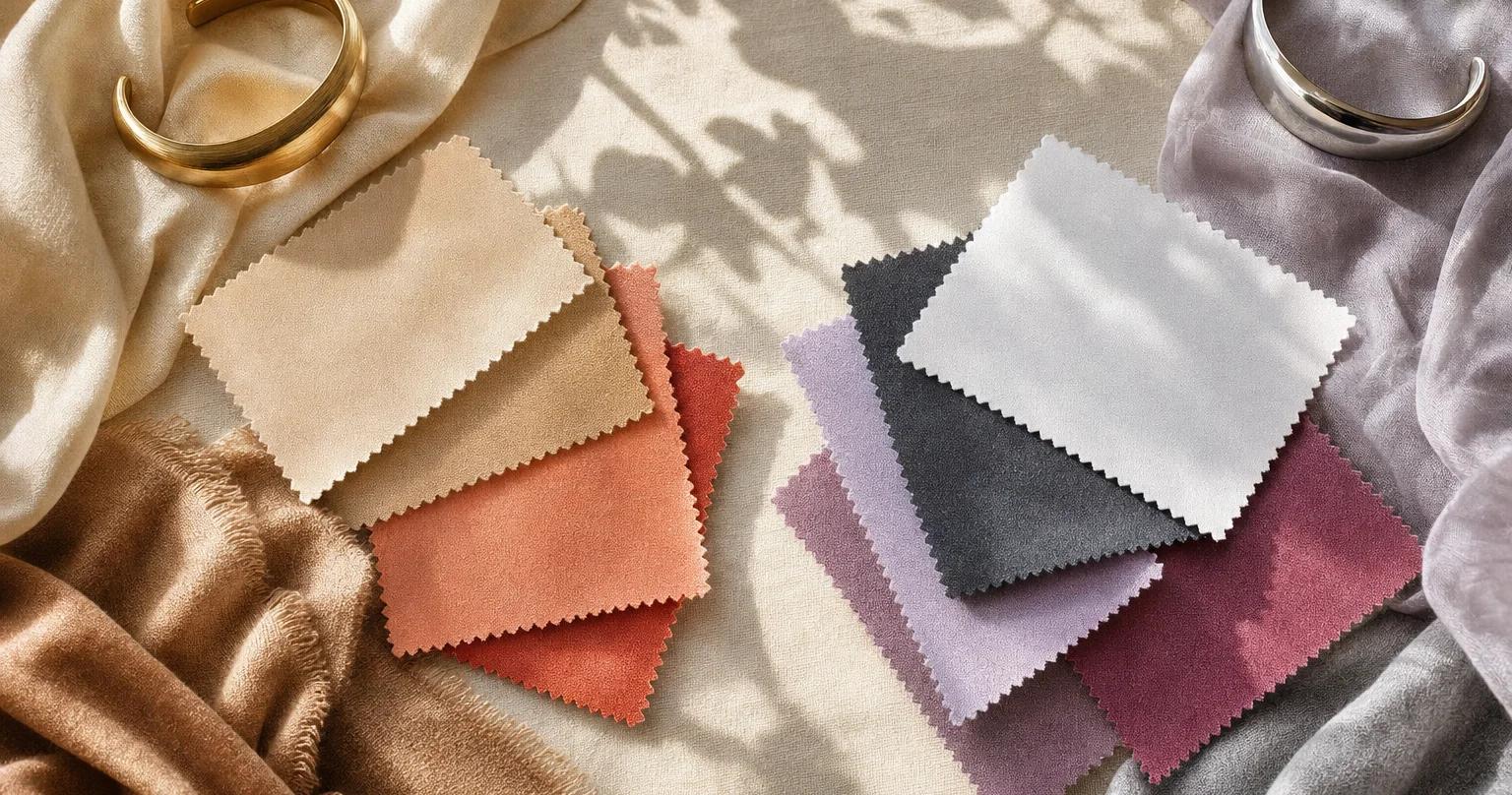
Most warm vs cool undertone guides lead with looking at inner wrist veins and sun-burn history. Both shortcuts fail routinely: surface melanin hides veins on deep skin, green-gray olive overtones turn veins teal regardless of undertone, and UV burn rate measures sun sensitivity rather than color temperature.
Replace vein folklore with comparative daylight checks near your jawline. Score the five weighted tests below in indirect window light to pinpoint Warm, Cool, or Neutral without guessing.
Weighted 5-test undertone scoring rubric
Weight live jawline fabric and lip reactions heavily (6 of 10 points) and treat wrist veins as zero points.
Score each test from 0 to its maximum point value below. Tally your Warm points vs Cool points across all five checks (10 points total). Notice that high-chroma mismatches must not count: compare medium ivory against soft optic white rather than blinding neon against muddy cream.
| Daylight Check (Weight) | Warm Undertone Signal | Cool Undertone Signal | Neutral / Mixed Signal |
|---|---|---|---|
| 1. Matched Draping: Warm Ivory vs Optic White (3 pts) | Ivory keeps skin smooth; optic white looks stark or gray | Optic white brightens eyes; cream casts yellow fatigue | Both look fine; test camel vs charcoal next |
| 2. Coral vs Cool Rose Lipstick Check (3 pts) | Warm peach-coral wakes up mouth without sitting on top | Cool rose or berry blends in and whitens teeth | Muted rosewood wins over bright coral and bright berry |
| 3. Equal-Finish Collarbone Metal (2 pts) | Brushed gold warms skin and blends with jawline | Brushed silver cleans up shadows and redness | Both gold and silver sit evenly (test rose gold) |
| 4. White Paper Jawline Baseline (1 pt) | Golden, peachy, or warm olive cast next to pure white paper | Pinkish, rosy, or blue-gray cast next to pure white paper | Muted gray-green without clear yellow or pink |
| 5. Neutral Foundation Pull Check (1 pt) | Neutral foundations consistently pull pink on your jaw | Neutral foundations turn orange or overly yellow after 1 hour | Neutral foundation vanishes with zero color shift |
Why standard undertone tests conflict (and how to fix each trap)
Conflicting results rarely mean a broken test; they usually reveal an olive overtone, facial redness, or uneven lighting.
When cream vs white says Cool yet gold vs silver says Warm, identify which surface distractor interfered before labeling yourself Neutral:
| Conflict Trap | Why Tests Disagree | What To Inspect Instead |
|---|---|---|
| Olive surface cast | Greenish-yellow overtone makes veins appear green even on Cool Olive skin | Look at jaw-to-neck transition; run tomato red vs berry-plum drapes |
| Cheek redness or rosacea | Surface pinkness tricks readers into buying Cool pink bases over Warm skin | Mask cheeks and judge neck, chest, and under-chin shadows only |
| Rich melanin depth | Dark skin hides wrist veins and rarely burns cleanly in sun | Compare vivid cobalt vs burnt terracotta and bronze vs silver shine |
| Indoor bulbs & camera WB | Yellow room bulbs warm skin; Lightroom-style Temp/Tint auto-shifts skin | Face an indirect north window with interior lamps switched off |
| Brightness mismatch | Pure optic white overwhelms low-contrast Soft Autumn or Soft Summer skin | Test soft off-white vs parchment ivory so chroma stops muddying results |
4-step daylight tie-breaker to settle a 5–5 split
Break any 50/50 tie by testing red undertones side by side and lowering garment chroma.
- 1. Build a clean indirect window station: Stand 2 to 3 feet from indirect daylight, wipe off bronzer and tinted SPF, pull dyed hair back under a neutral gray cloth, and avoid colored bedroom walls.
- 2. Run the tomato-red vs cranberry-red head-to-head: Red exposes temperature faster than white or black. Alternate warm tomato red and cool cranberry blue-red right under your chin for 5 seconds each.
- 3. Check equal-finish camel vs slate charcoal: Hold matte camel against matte charcoal (same fabric weave). Warm skin settles under camel; cool skin sharpens under charcoal.
- 4. Verify whether chroma or olive overtone broke the tie: If both loud coral and bright fuchsia look separate while soft sage and rosewood look natural, muting dominates temperature. Confirm with a StyleCard daylight selfie.
Bottom line: Score Warm >= 6 for Spring or Autumn, Cool >= 6 for Summer or Winter, and a tight 5–5 tie with soft muted wins for a Neutral-border sub-season.
Try it on your photo
Verify your undertone with StyleCard
Upload a bare-faced window-light selfie and answer 5 short questions for a free StyleCard undertone and seasonal preview in 60 seconds.
Verify your undertone with StyleCardRelated StyleCard guides
FAQ
- Why is the wrist vein test unreliable for undertone?
- Vein appearance depends on skin thickness, melanin depth, and ambient lighting rather than pigment response. Olive overtones scatter yellow pigment over blue veins, making cool-olive skin show green veins.
- Can my skin look yellow on top and still have a cool undertone?
- Yes. This overtone-versus-undertone split is common in Cool Olive and East Asian complexions. A yellow surface cast can sit over a cool pink or blue-leaning response to fabric.
- What does it mean if both gold and silver look good on me?
- Equal comfort with gold and silver points to a neutral undertone (common in Light Spring, Light Summer, Soft Autumn, Soft Summer, Deep Autumn, and Deep Winter), where value or muting matters more than extreme warmth or coolness.
- Does getting a summer tan change my undertone?
- No. UV exposure increases surface melanin (shifting skin depth) and can let you borrow sister-season depth, but your underlying warm or cool reaction stays constant.
- What if warm ivory looks better than stark white, yet blue colors look great?
- You likely have a neutral-leaning or low-contrast season (such as Soft Summer or Light Spring) overwhelmed by blinding optic white. Compare soft cool white against cream before concluding Warm.
Sources
About the StyleCard Editorial Team
Our guides are written by the StyleCard Editorial Team using established color analysis frameworks, including the 12-season system and Munsell color dimensions (hue, value, and chroma), cross-checked against practitioner and reference sources and updated whenever research or product features change. Read our full methodology and editorial standards. See the Sources section above for the references cited in this guide.