
olive skin color analysis
Olive Skin Color Analysis
By the StyleCard Editorial Team · Last updated November 25, 2026
Bust the yellow-equals-warm olive myth. Compare Warm, Cool, and Neutral Olive seasons, spot foundation pull clues, and use exact olive hex-code swaps.
Short answer
Olive is a green-gray overtone layer, not a season or fixed temperature. Warm Olive leans golden-green and maps mostly to Soft, Warm, or Deep Autumn; Cool Olive leans lemon-gray and maps to Soft Summer, Cool Winter, or Deep Winter; Neutral Olive bridges both by matching contrast first.
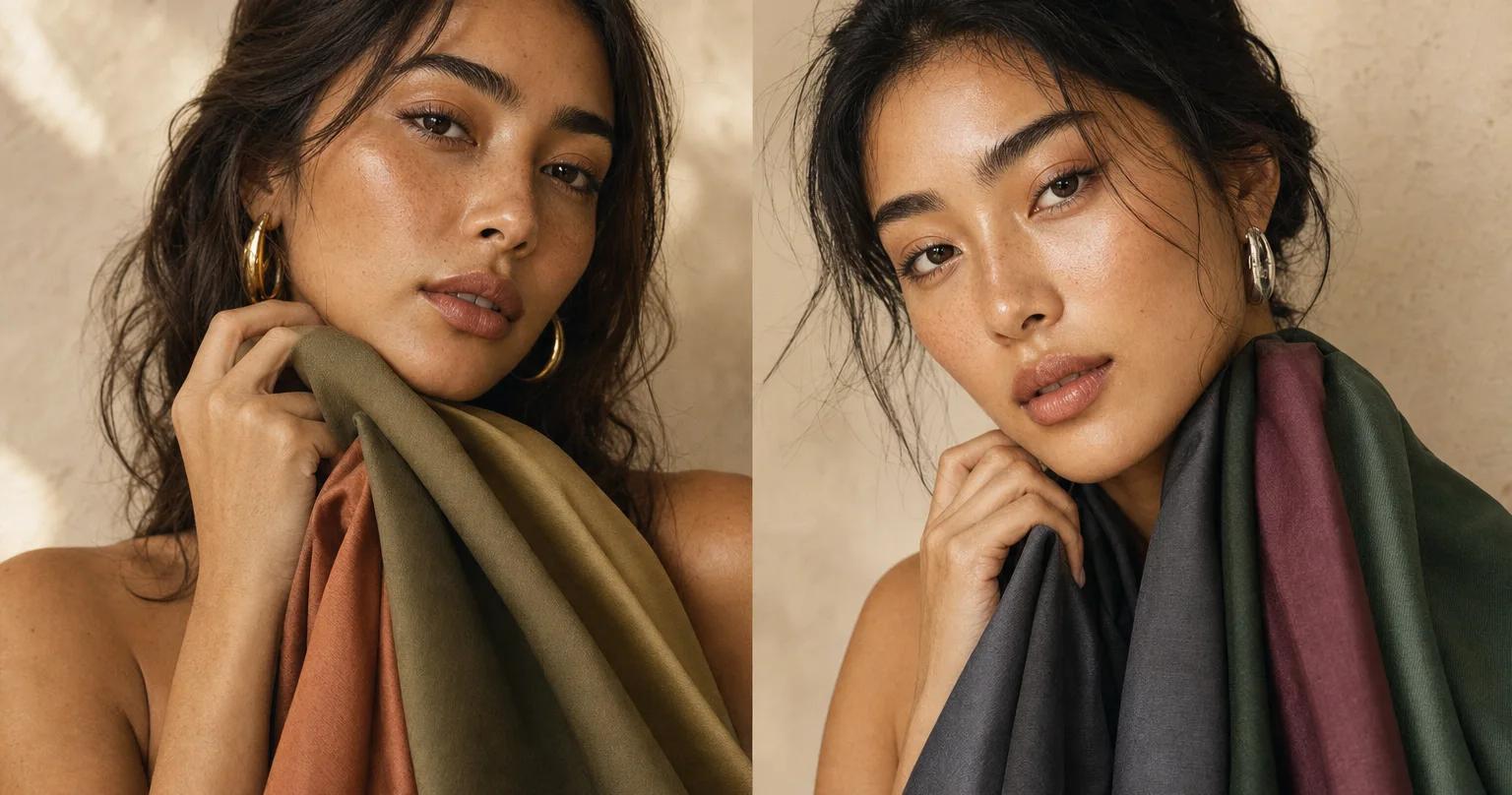
Olive skin breaks almost every beginner color quiz because two myths dominate beauty blogs: that yellow skin is automatically warm, and that olive skin only exists on medium-tan Autumn types. In reality, olive is a muted green-gray overtone column spanning Fair, Medium, and Deep depths, sitting over warm, cool, or neutral undertones.
Because yellow plus blue light mixing creates olive green, Cool Olive complexions often look lemon-yellow or grayish at first glance yet turn orange in warm caramel foundations and glowing in muted berry or slate charcoal.
Warm Olive vs Cool Olive vs Neutral Olive matrix
Use neutral foundation pull and matched fabric pairs together: if neutral foundation pulls pink you lean Warm Olive; if neutral pulls orange you lean Cool Olive.
As beauty communities and pigment guides emphasize, surface yellowness misleads shoppers daily. Match your skin's behavior against all five dimensions below to place your olive column inside the 12-season map:
| Trait / Clue | Warm Olive | Cool Olive | Neutral Olive |
|---|---|---|---|
| Surface Cast in Daylight | Golden-green or warm bronze-olive | Lemon-yellow, grayish-green, or ashy beige | Balanced muted gray-green across jaw and neck |
| Foundation Pull Clue | Neutral foundations pull slightly pink; warm-golden bases blend cleanly | Neutral and golden foundations turn orange/peach after 1 hour | Neutral olive bases vanish; pure pink and strong yellow both fail |
| Winning Whites & Darks | Warm ivory (#F5EEDB), camel, espresso mahogany | Cool soft white (#F4F6F9), slate charcoal, black-navy | Bone cream (#E8E2D7), mushroom taupe, balanced navy |
| Likely 12 Seasons | Soft Autumn, Warm Autumn, Deep Autumn (fair edge: Light Spring) | Soft Summer, Deep Winter, Cool Winter, Bright Winter | Soft Autumn / Soft Summer cusp or Deep Autumn / Deep Winter cusp |
| Metals & Lipsticks | Antique gold, bronze, brass; terracotta, warm brick, spiced rosewood | Brushed silver, white gold, gunmetal; mauve-berry, plum, blue-red | Soft champagne gold or pewter; neutral rose-brown, muted berry |
Olive colors to wear vs avoid (with hex swaps)
Replace stark pastel pinks, neon yellows, and orangey camel with deep teal, olive moss, spiced berry, and charcoal-espresso so clothes stop reflecting gray or green.
Olive skin amplifies contrast errors: icy baby pinks bounce green shadows back onto the jaw, while yellow-heavy mustard clashes with Cool Olive undertones. Swap trouble colors directly using these paired hex codes:
| Color That Triggers Gray/Green Cast | Warm Olive Replacement (Hex) | Cool Olive Replacement (Hex) |
|---|---|---|
| Stark Optic White (#FFFFFF) | Warm Ivory Cream (#F4EEDB) | Soft Cool White (#F2F4F7) |
| Bubblegum / Baby Pink (#FFD1DC) | Warm Terracotta Rose (#C2746A) | Dusty Mauve Rose (#B47789) |
| Neon Yellow / Chartreuse (#CCFF00) | Golden Ochre (#C5942A) | Soft Seafoam Slate (#6E9B95) |
| Hot Tangerine Orange (#E38B17) | Spiced Rust Paprika (#9E472D) | Deep Cranberry Berry (#8E2C48) |
| Ashen Gray Beige (#D8C3B2) | Toasted Camel (#B18A5E) | Mushroom Stone Taupe (#7F7977) |
| Chalky Lavender Pastel (#D8C7EE) | Rich Olive Moss (#5E6A3E) | Deep Peacock Teal (#145566) |
4-step olive undertone & season tie-breaker
Run four matched-depth pairs and one lip test because wrist veins always fail behind olive pigment.
- 1. Compare the jaw and neck against white printer paper: Confirm your skin leans green-gray or golden-green rather than clear pink or clear peach. Ignore cheek surface redness.
- 2. Run 4 equal-depth fabric pairs in indirect daylight: Alternate warm ivory vs cool soft white, tomato red vs cranberry blue-red, camel vs charcoal, and peach vs muted berry under your chin for 5 seconds each.
- 3. Run the mauve-berry vs brick-terracotta lip test: Apply muted cool berry on bare lips, wipe, then apply warm brick-terracotta. Berry clears Cool Olive; brick integrates seamlessly with Warm Olive.
- 4. Lock your chroma with matched metals and StyleCard: Test brushed antique gold vs brushed silver at the collarbone (same finish), then run a daylight selfie in StyleCard to split Soft vs Deep olive palettes.
Bottom line: Olive skin spans every depth from fair Fitzpatrick II to deep Fitzpatrick V: ignore green wrist veins, let foundation-pull clues plus berry-vs-brick lipstick settle Warm vs Cool Olive, and let contrast choose Soft vs Deep.
Try it on your photo
Decode your olive season with StyleCard
Upload an unfiltered daylight selfie to pinpoint whether your olive skin leans Soft Autumn, Deep Autumn, Soft Summer, or Deep Winter.
Decode your olive season with StyleCardRelated StyleCard guides
FAQ
- Is olive skin always warm-toned?
- No. Olive is a greenish overtone caused by how yellow, brown, and blue tones interact in skin. Fair, medium, and deep olive complexions can be Warm Olive, Cool Olive, or Neutral Olive.
- Why can cool olive skin still look yellow?
- Cool olive frequently mixes a cool blue-gray base with a lemon-yellow surface cast. Despite looking yellow next to pure pink skin, standard warm foundations turn orange on cool olive jaws.
- Which 12 color seasons are most common for olive skin?
- Soft Autumn, Deep Autumn, Soft Summer, and Deep Winter account for most olive types because olive skin naturally lowers visible warmth and adds muted depth. Bright Winter and Warm Autumn occur when clarity or golden pigment dominates.
- Does neutral olive look better in gold or silver jewelry?
- Neutral olive typically handles brushed champagne gold, muted rose gold, and tarnished pewter evenly. Keep finishes soft or brushed rather than mirror-bright unless you have high Deep Winter contrast.
- What hair colors clash worst with olive skin?
- Warm olive clashes with icy ash blonde or blue-black box dye (which pulls sallow green). Cool olive clashes with brassy golden caramel and heavy orange-copper highlights.
Sources
About the StyleCard Editorial Team
Our guides are written by the StyleCard Editorial Team using established color analysis frameworks, including the 12-season system and Munsell color dimensions (hue, value, and chroma), cross-checked against practitioner and reference sources and updated whenever research or product features change. Read our full methodology and editorial standards. See the Sources section above for the references cited in this guide.