
sister seasons color analysis
Sister Seasons Color Analysis
By the StyleCard Editorial Team · Last updated November 25, 2026
Stuck between two color seasons? Compare all 6 sister-season border pairs, get the single tie-breaker test for each pair, and learn strict borrowing rules.
Short answer
Sister seasons share your primary trait across adjacent color families: Light Spring/Light Summer, Soft Summer/Soft Autumn, Deep Autumn/Deep Winter, Bright Winter/Bright Spring, Warm Spring/Warm Autumn, and Cool Summer/Cool Winter. Break any tie by testing whichever secondary trait flips (temperature or chroma).
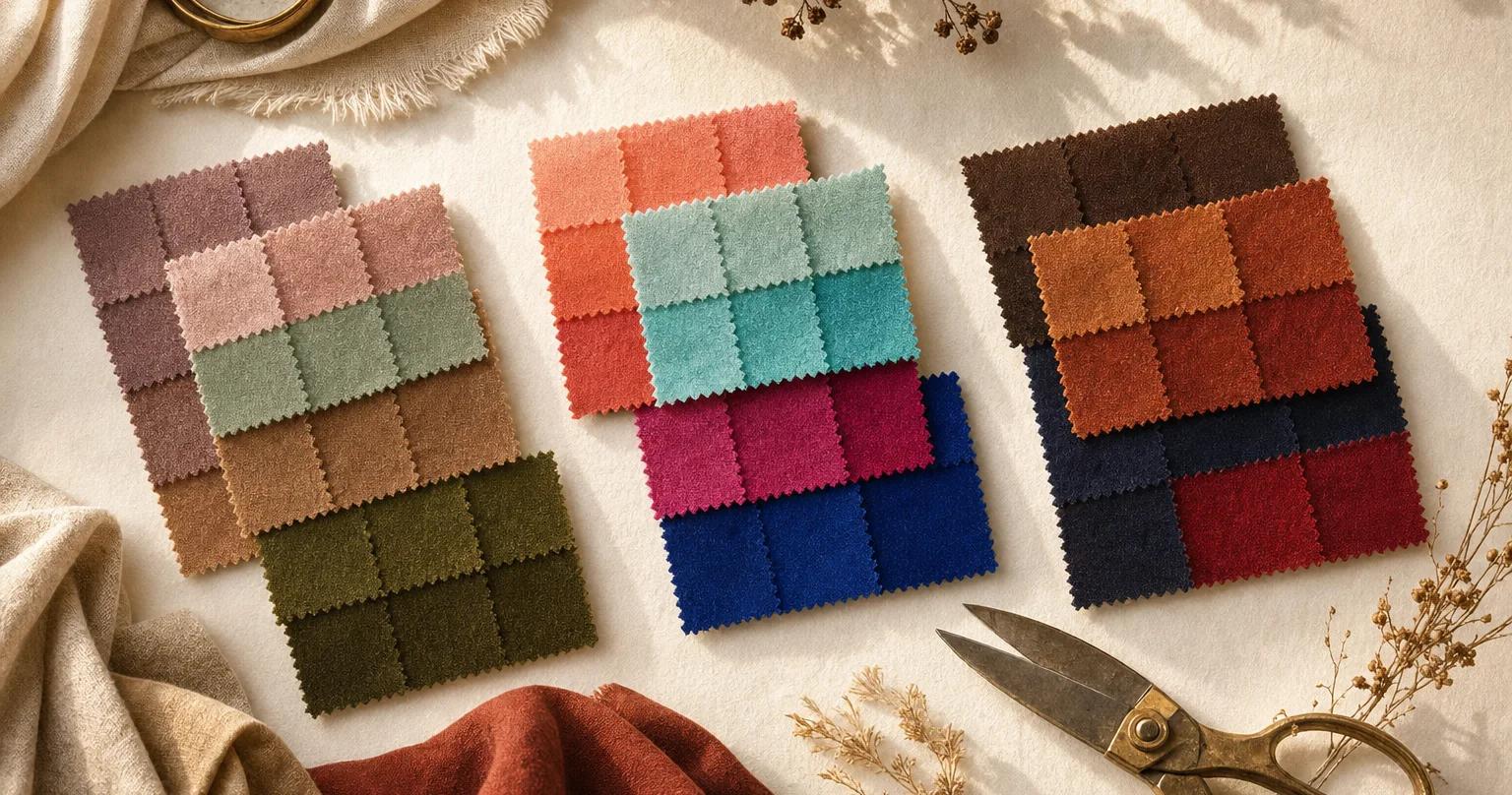
Sitting squarely between two palettes is the most common reason color quizzes give conflicting answers. In 12-season color analysis, those neighboring palettes are called sister seasons because they share one dominant trait (lightness, depth, muting, clarity, warmth, or coolness) while flipping across a border.
Understanding your sister season solves two problems at once: it hands you the fastest head-to-head test to confirm your true home season, and it sets clear guardrails on which neighboring shades you can safely borrow without washing out your complexion.
All 6 sister-season border pairs and decisive tie-breakers
Every borderline split breaks cleanly with one targeted head-to-head drape or lipstick swap in daylight.
The four flow-border pairs flip temperature while preserving lightness, muting, depth, or clarity. The two True (cardinal) pairs preserve pure temperature while flipping saturation and contrast:
| Sister-Season Pair | Shared Dominant Trait | Flipped Trait | Single Decisive Daylight Tie-Breaker |
|---|---|---|---|
| Light Spring vs Light Summer | Airy Lightness (Low contrast) | Warm peach vs Cool rose | Peach-coral gloss vs cool baby-rose lip on bare skin |
| Soft Summer vs Soft Autumn | Muted Chroma (Gentle haze) | Cool slate-rose vs Warm olive-camel | Cool silver-sage & pewter vs warm golden olive & antique brass |
| Deep Autumn vs Deep Winter | Dark Depth (High value weight) | Warm espresso spice vs Cool icy shadow | Warm brick-red lip & espresso leather vs cool damson plum & jet black |
| Bright Winter vs Bright Spring | Vivid Clarity (High saturation) | Cool fuchsia-white vs Warm coral-cream | Electric cool fuchsia & crisp white vs warm poppy coral & cream |
| Warm Spring vs Warm Autumn | Pure Warmth (Golden base) | Bright clear vs Earthy muted | Clear bright turquoise & coral vs toasted mustard & muted olive |
| Cool Summer vs Cool Winter | Pure Coolness (Blue base) | Soft misty vs Crisp high-contrast | Soft marine navy & forged iron vs pitch black + optic white + blue-red |
Safe sister-season borrowing rules vs strict boundaries
Flow seasons borrow up to 30% of bridge neutrals and accessories effortlessly, whereas True seasons must keep lip and foundation temperatures locked.
Not every sub-season borrows equally. Flow seasons sitting on a temperature cusp (Light, Soft, Deep, Bright) cross comfortably into neutral-leaning shades of their neighbor, while pure True seasons look off fast if they cross into the opposite temperature:
| Wardrobe / Beauty Element | Safe To Borrow From Sister Season | Keep Strictly In Your Home Season |
|---|---|---|
| Bottoms, Skirts & Footwear | Yes: trousers, indigo denim, bags, and leather boots below the waist blend effortlessly | None required below the hip if collarbone stays aligned |
| Seasonal Tanning Shifts | Yes: Soft Summer with a tan borrows Soft Autumn sage-olive; Light Spring borrows Light Summer soft navy | Avoid neon or extreme icy swaps during summer tans |
| Tops, Scarves & Blazers | Flow seasons only (max 1–2 accents when paired with home-season makeup) | True Summer & True Winter: avoid all warm orange/camel at collarbone |
| Foundation & Lipstick | Only neutral bridge nudes within your exact brightness/depth tier | Always lock home undertone (never mix warm brick lip on Cool Winter skin) |
| Hair Color & Eyeglasses Frames | Minor neutral-tone shifts within 1 level of natural depth | Never switch base metal/dye temperature across the warm-cool line |
3-step workflow when two quizzes split 50/50
Test the disputed axis only rather than starting over with all 12 palettes.
- 1. Name the exact two finalist seasons: Stop reading full 12-season charts. Pinpoint which border pair keeps repeating across quizzes or mirror checks (such as Deep Autumn vs Deep Winter).
- 2. Run the single tie-breaker row from Table 1: Face indirect daylight without bronzer or colored hair down, and hold ONLY the two opposing test swatches or lipsticks under your chin for 5 seconds each.
- 3. Verify overlap vs fail-point on StyleCard: Identify which wrong extreme hurts worse (looking gray vs looking orange), then confirm with a daylight selfie on StyleCard to get custom outfit and makeup guardrails.
Bottom line: If two sister seasons both partly flatter you, wear their shared bridge neutrals daily and use your stronger lipstick/collar winner as your official home season.
Try it on your photo
Settle your border season on StyleCard
Upload a bare-faced window selfie to pinpoint your true home season and see which sister shades you can borrow.
Settle your border season on StyleCardRelated StyleCard guides
FAQ
- What are sister seasons in seasonal color analysis?
- Sister seasons are adjacent sub-seasons in the 12-season wheel that share your dominant trait (such as Lightness, Muting, Depth, or Clarity) while shifting undertone temperature or contrast across the border.
- Which seasons can borrow most easily from a sister season?
- The eight neutral-leaning flow seasons (Light Spring/Summer, Soft Summer/Autumn, Deep Autumn/Winter, and Bright Winter/Spring) borrow easily because their dominant trait stays consistent.
- Why do True Summer, True Winter, True Spring, and True Autumn struggle to borrow?
- True seasons are temperature-first rather than depth- or chroma-first. True Spring and True Autumn share warmth across chroma lines, while True Summer and True Winter split sharply over bright contrast versus muted softness.
- Can tanning temporarily shift me toward my sister season?
- Tanning deepens surface melanin and can let muted borders like Soft Summer wear slightly warmer Soft Autumn accents cleanly, though your core undertone does not reverse.
- How do I decide if I am truly in the middle between two seasons?
- Check which wrong extreme hurts your face first (for example, icy pastels vs orange rust) and anchor daily outfits in shared neutral crossovers while keeping lip and hair color in your slightly stronger home season.
Sources
About the StyleCard Editorial Team
Our guides are written by the StyleCard Editorial Team using established color analysis frameworks, including the 12-season system and Munsell color dimensions (hue, value, and chroma), cross-checked against practitioner and reference sources and updated whenever research or product features change. Read our full methodology and editorial standards. See the Sources section above for the references cited in this guide.