
dark winter color palette
Deep Winter Color Palette
By the StyleCard Team · Last updated June 27, 2026
See deep winter colors, makeup cues, hair direction, and outfit ideas, plus how deep winter differs from dark autumn and true winter.
Short answer
Deep winter is the darkest, most dramatic winter palette: neutral-cool to cool undertone, medium-high chroma, deep value, and at its best in inky jewel tones and high contrast with a slight autumn shadow.
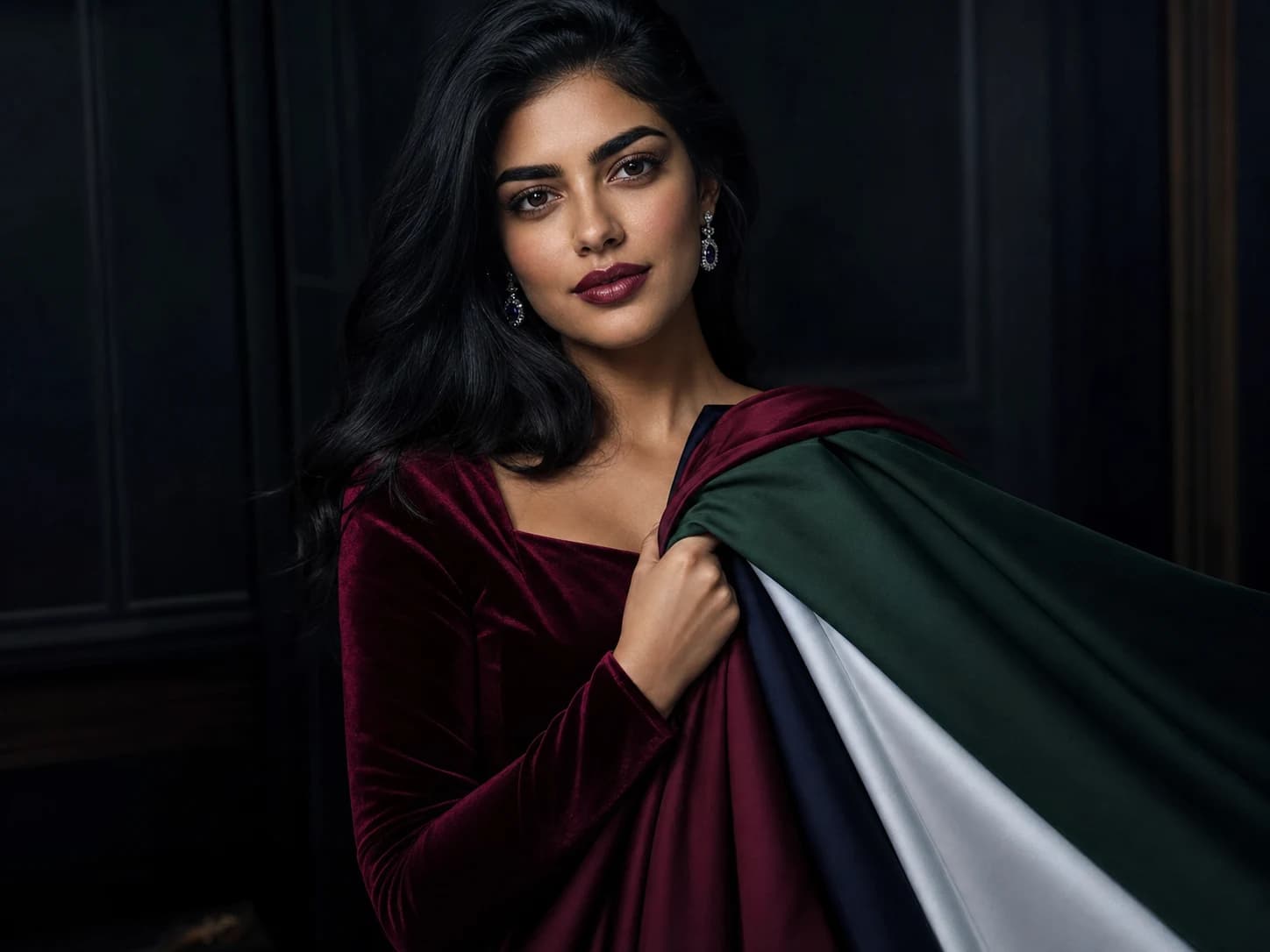
The deep winter color palette — also called dark winter — is the most dramatic winter sub-season. It sits closest to autumn, so it carries more depth than bright winter or cool winter, while always keeping a cool or neutral-cool undertone.
Think Prussian blue, cobalt, inky navy, deep teal, forest green, crimson, damson, granite grey, and black. Warm orange-based lips, honey highlights, peach blush, and caramel balayage tend to look out of place with deep winter's inky drama.
Deep winter palette traits
Deep winter — or dark winter — is the deepest winter sub-season. Because it sits closest to autumn, it carries more shadow and substance than bright or cool winter. But it stays cool at its core: cooler reds beat warm brick reds, and navy and teal outperform mustard and rust.
The easiest neutrals are black, charcoal, granite, concrete grey, deep navy, and very dark cool teal. Warm camel and orange-brown tend to muddy the face because the cool undertone makes them look warmer than intended. One or two intense colors usually look better than many competing shades.
Deep winter vs dark autumn
Deep winter and dark autumn share depth, which makes them easy to confuse. The key difference is temperature. Dark autumn keeps warm: warm brick-reds, espresso, cognac, and gold look natural. Deep winter is cooler: cool purple-reds, Prussian blue, and crisp navy work better than warm earthy shades.
Try comparing a warm brick-red against a cool purple-red. If the cool purple-red looks more refined and the brick-red feels slightly orange or muddy, you lean deep winter. If the warm brick-red settles naturally while the cool purple-red looks a little foreign, dark autumn may be closer.
Palette preview
Colors to test near your face
- Undertone
- Neutral-cool to cool
- Chroma
- Medium-high and clear
- Value
- Deep
- Contrast
- High
Best colors
Prussian blue
#1A3A46
Cobalt
#0245AB
Inky navy
#111E6C
Deep teal
#01694F
Forest green
#274F36
Crimson
#B31A3A
Neutrals
White
#FFFFFF
Concrete grey
#C0C0C0
Granite
#848482
Dark grey
#43464C
Black
#0A0A0A
Makeup cues
Berry rose
#C54B8B
Damson
#5A2149
Use carefully
Warm orange-brown
#A0522D
Outfit starting points
- Black coat, Prussian-blue knit, berry lip.
- Granite trouser, crimson top, silver hardware.
- Deep-teal dress, gunmetal heel, damson lipstick.
- White shirt, navy suit, cool-magenta accessory.
Makeup and hair direction
Deep winter makeup can take depth and contrast: cool or neutral-cool satin foundation, pink to deeper-red blush depending on skin depth, deep red or burgundy or cool plum lip, and taupe, grey, black, or jewel-toned eyeshadow. Warm orange-based lips, peach blush, and too many competing colors in one look are the most common pitfalls.
Hair looks most natural in deep brunette, black, blue-black, cool espresso, and dark cool burgundy only if the overall effect stays clear. Honey highlights, auburn warmth, caramel balayage, and soft fade-outs can soften the depth too much.
Deep Winter Color Palette clothing checkpoints
Deep Winter Color Palette works best when clothing follows the same undertone, value, chroma, and contrast as the palette. Start with the reliable anchors: White, Concrete grey, Granite, Dark grey, Black. Then use face-framing accents from the best-color range: Prussian blue, Cobalt, Inky navy, Deep teal, Forest green, Crimson.
Keep the strictest colors near your face. Tops, jackets, scarves, earrings, glasses, and lipstick affect skin and eye clarity most. Pants, shoes, and bags can be more flexible, but the outfit should still read as one color story instead of several competing palettes.
Use caution with Warm orange-brown. Those colors are not banned, but they usually work better away from the face or balanced with stronger palette colors above the waist.
- Best accents to test: Prussian blue, Cobalt, Inky navy, Deep teal, Forest green, Crimson.
- Best neutrals to build around: White, Concrete grey, Granite, Dark grey, Black.
- Makeup cues to compare: Berry rose, Damson.
- Avoid buying a full capsule until three near-face colors work in daylight.
- If black, white, beige, denim, or gold feels off, adjust those basics before replacing statement pieces.
Deep Winter Color Palette verification loop
Verify Deep Winter Color Palette with paired comparisons, not isolated swatches. Hold one likely best color near your face, then hold the nearest wrong color. You are looking for changes in skin evenness, under-eye shadows, redness, jaw definition, and whether your eyes look clearer.
Then test a real outfit and a real makeup cue. A palette should survive practical use: a top you would wear, a neutral you can build around, a lipstick or blush family, a metal, and a denim or shoe color. If the palette only looks good as a digital swatch, keep testing.
Neighboring seasons are the hardest part. If the result feels close, compare the sister palette directly rather than asking whether every color is perfect. Seasonal analysis is strongest when it explains which tradeoff is easier: warmer or cooler, softer or brighter, lighter or deeper.
- Daylight test: one best color, one avoid color, and one neutral from the palette.
- Makeup test: compare Berry rose, Damson against an opposite undertone.
- Wardrobe test: build one outfit from Black coat, Prussian-blue knit, berry lip..
- Photo test: retake in neutral light if the result depends on one selfie.
- Shopping rule: buy slowly, keep useful off-palette pieces away from the face, and replace basics first.
How to test it
Hold Prussian blue, crimson, and deep teal near your face in natural light. Then compare them with warm camel, burnt orange, and amber gold. Deep winter colors should make the face look vivid and settled; warm earthy colors should look like they belong to a different season.
A useful backup test: try a cool plum lipstick against a warm brick-red. Cool plum should look dramatic and clear; brick-red should look slightly orange or muddy. StyleCard can check this direction from a selfie before you commit to new makeup, clothes, or a hair change.
When using the palette, keep the depth crisp. A deep winter outfit can be simple: black, granite, navy, or deep teal with one cool red or plum accent. Avoid warming the look with cognac, rust, or yellow gold unless the piece is far from the face, because those details can push the impression toward dark autumn.
Try it on your photo
Check your deep winter palette
Upload a selfie and see whether inky cool depths work on your face before committing to a new wardrobe, makeup, or hair direction.
Check your deep winter paletteRelated StyleCard guides
FAQ
- Is dark winter the same as deep winter?
- Yes. Those labels are used interchangeably in most expert sources.
- Can dark winter wear black?
- Yes. Black is one of the easiest and most natural neutrals for deep winter coloring.
- Should dark winter wear nude lipstick?
- Usually not. Even natural-looking makeup needs more depth than skin-tone nude for deep winter. A cool plum or deep rose tends to look more settled.
- How do I tell deep winter from dark autumn?
- Try a cool purple-red versus a warm brick-red. Deep winter normally looks cleaner with the cool purple-red; dark autumn looks cleaner with the warm brick-red.
- Can deep winter wear brown?
- Only carefully. Cool black-brown, espresso, or violet-brown can work, but golden brown, cognac, camel, and rust usually push the look toward deep autumn.
Sources
About the StyleCard Team
Our guides are written using established color analysis frameworks — including the seasonal color system and Munsell color theory — reviewed against practitioner and academic sources, and updated when research or product changes warrant a revision. See the Sources section above for the references used in this article.