
clothing style quiz
Clothing Style Quiz
By the StyleCard Editorial Team · Last updated November 25, 2026
No vague fashion-icon trivia. Score 6 real closet choices into 6 practical style archetypes, then combine your silhouette recipe with your 12-season palette.
Short answer
Score the 6 everyday wardrobe questions below (fit, neckline/shoulder line, fabric texture, daily shoes, print/detail tolerance, and weekly dress code) to lock your primary style archetype, then apply your seasonal palette to every top, blazer, and shoe anchor.
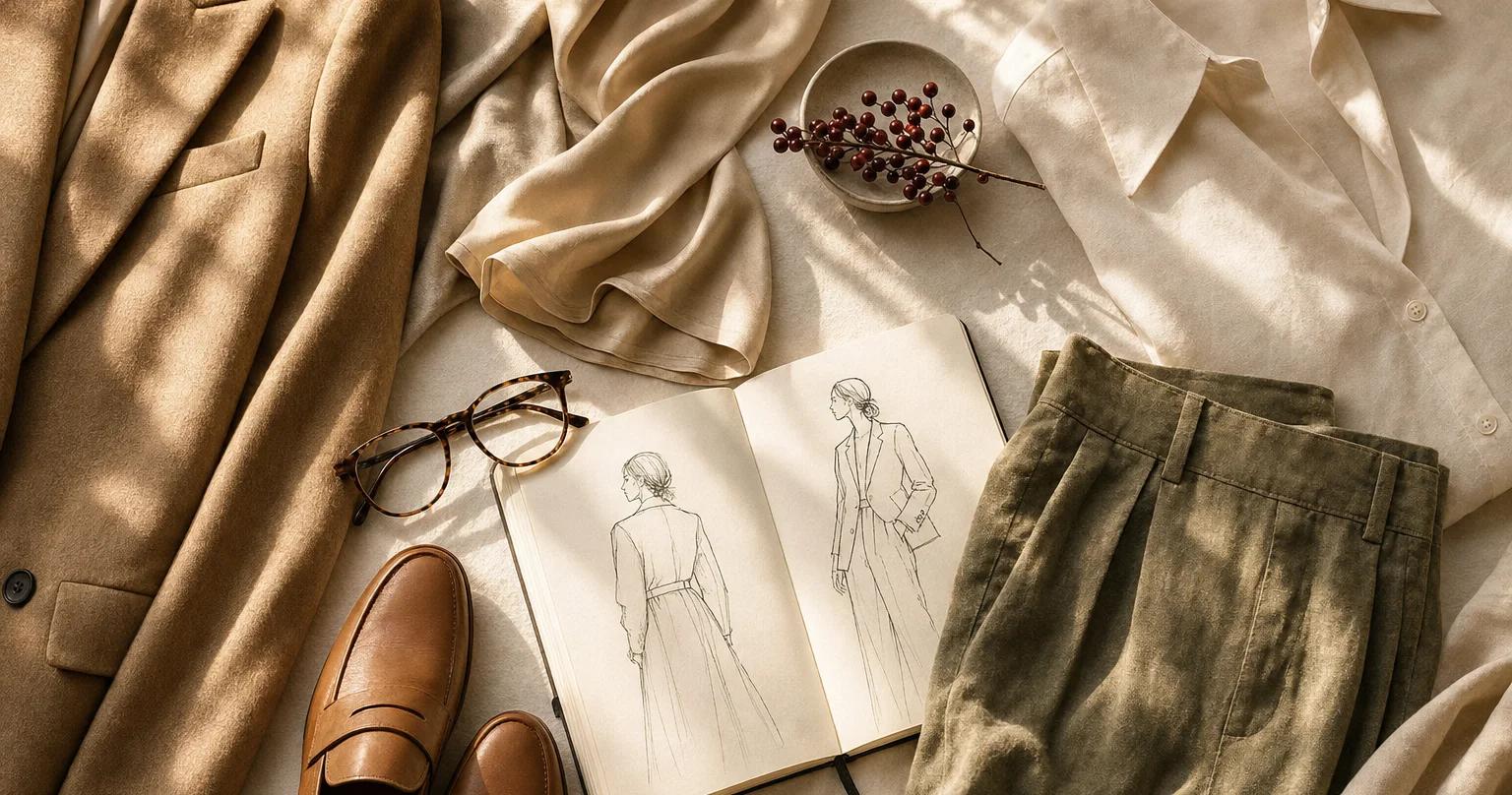
Most online style quizzes make two mistakes: they ask celebrity-trivia questions you do not recognize, or they intentionally ignore color so a Dramatic blazer guide still lands you in an unflattering hue. Knowing whether you want structured shoulders or draped waistlines only solves half of getting dressed.
Real wardrobe clarity pairs your personal style archetype (line, cut, texture, footwear) with your 12-season color palette. Use this zero-trivia 6-question rubric to find your primary and secondary style coordinates in under two minutes.
Scorable 6-question clothing style quiz (zero trivia)
Pick the option (A through F) you genuinely wear twice a week rather than outfits saved only for aspiration.
Tally which column letter appears most often across the 6 rows below. If two letters tie (such as A and B), treat the higher work-week fit as your Primary Style (70%) and the second as your Accent Style (30%).
| Closet Question | A: Classic Tailored / B: Minimalist Modern | C: Soft Romantic / D: Relaxed Natural | E: Polished Smart-Casual / F: Creative Editorial |
|---|---|---|---|
| 1. Jacket & Shoulder Line | A: Defined blazer or trench · B: Clean box coat or sleek collarless jacket | C: Cropped drape cardigan or belted wrap · D: Overshirt, suede utility, or chore coat | E: Unstructured knit blazer or bomber · F: Sculptural, asymmetric, or vintage statement coat |
| 2. Everyday Trousers & Skirts | A: Pleated straight wool slacks · B: Wide crisp column trousers | C: Bias-cut midi skirt or flared soft hem · D: Relaxed straight denim or linen drawstring | E: Cropped tailored chino or dark straight jeans · F: Wide cargo, velvet, or patterned culottes |
| 3. Necklines & Shirts | A: Crisp button-down or crew knit · B: High mock-neck or clean boatneck | C: Soft V-neck, wrap top, or gentle flutter sleeve · D: Open Henley, relaxed tee, or chambray | E: Fine polo knit or crisp tee under vest · F: Statement collar, sheer layer, or contrast trim |
| 4. Favorite Fabric Textures | A: Smooth wool, cotton poplin, fine merino · B: Crisp technical twill, heavy silk crepe, matte knit | C: Fluid chiffon, brushed cashmere, satin · D: Slub linen, washed cotton, suede, nubby knit | E: Pique cotton, crisp twill, light leather · F: Boucle, brocade, cord, mixed metallic texture |
| 5. Default Daily Shoes | A: Penny loafers or pointed ankle boots · B: Clean tonal sneakers or square-toe leather mules | C: Almond ballet flats or strappy block heels · D: Suede clogs, canvas sneakers, or Chelsea boots | E: Minimal leather trainers or suede desert boots · F: Lug-sole boots, metallic flats, or statement heels |
| 6. Print & Detail Tolerance | A: Subtle pinstripes, clean horn buttons · B: Solid monochromatic blocks, zero hardware clutter | C: Watercolor florals, delicate piping · D: Earthy plaids, raw seams, woven belts | E: Fine tonal stripes, clean sport piping · F: Bold geometric color-blocking, layered jewelry |
How your style archetype pairs with your color season
Use StyleCard's 3-3-3 bridge: lock garment silhouette to your archetype and lock fabric colors to your color season.
Once you know your top letter score (A–F), translate it directly into repeatable garments adapted for your Spring, Summer, Autumn, or Winter palette:
| Archetype (Letter) | Core Wardrobe Trio (Jacket · Bottom · Shoe) | Warm Seasons (Spring / Autumn) | Cool Seasons (Summer / Winter) |
|---|---|---|---|
| A: Classic Tailored | Structured blazer · pressed trouser · leather loafer | Camel or warm navy blazer, ivory poplin, cognac loafers | Slate or crisp black blazer, cool white shirt, black/pewter loafers |
| B: Minimalist Modern | Clean column coat · wide trouser · architectural trainer | Warm oat tonal set, camel-espresso contrast, clean tan trainer | Bone gray tonal set (Summer) or black-white graphic columns (Winter) |
| C: Soft Romantic | Wrap blouse or cropped cardigan · bias midi · almond flat | Peach silk, terracotta wrap skirt, warm champagne suede flat | Dusty rose drape, plum-berry skirt, dove-gray or silver leather flat |
| D: Relaxed Natural | Suede overshirt · straight denim · Chelsea boot | Olive linen chore jacket, tobacco-stitch denim, cognac suede | Slate chambray overshirt, gray-blue denim, pewter or charcoal boot |
| E: Polished Smart-Casual | Knit blazer · crisp tee & chino · minimal leather sneaker | Warm tan blazer, warm ivory tee, mid-indigo denim | Soft navy knit blazer, cool rose/ice tee, crisp charcoal trousers |
| F: Creative Editorial | Statement coat · textured wide pant · lug-sole boot | Paprika knit + aubergine velvet + antique brass hardware | Electric cobalt or magenta + charcoal wool + gunmetal hardware |
3-step method to build your StyleCard Outfit Direction
Separate silhouette decisions from color decisions first, then merge them into one repeatable 9-piece rotation.
- 1. Verify your 3-feeling filter against actual wears: Audit the 10 outfits you wore most in the past month. Pick 3 words describing how they feel (such as sharp, effortless, fluid) and confirm your A–F archetype matches.
- 2. Apply the 3-3-3 rule within one seasonal palette: Choose 3 tops, 3 bottoms, and 3 shoe anchors cut in your Primary Archetype silhouette, making sure all 9 pieces pull from your 70% seasonal neutrals + 30% face accents.
- 3. Combine selfie + quiz in StyleCard: Run StyleCard's 5-question essentials quiz alongside your window-light selfie so your Outfit Direction card unifies silhouette, climate, occasion, and color harmony automatically.
Bottom line: Stop separating style quizzes from color analysis: pick silhouettes from your A–F score and pick dyes, metals, and necklines strictly from your 12-season palette.
Try it on your photo
Get your custom Outfit Direction card
Answer 5 style & climate questions alongside your selfie for a free StyleCard preview, or unlock all 5 visual cards for $9.99 once.
Get your custom Outfit Direction cardRelated StyleCard guides
FAQ
- How is a clothing style quiz different from a color analysis quiz?
- A clothing style quiz maps silhouette, structure, fabric texture, and footwear preferences into style archetypes (like Classic Tailored or Soft Romantic), whereas color analysis maps skin undertone and contrast into wearable hues and metals. You need both to build outfits that actually mix.
- Can I be a mix of two clothing style archetypes?
- Yes. Almost everyone dresses as a 70/30 blend, such as Minimalist Modern tops with Relaxed Natural footwear, or Classic Tailored blazers over Soft Romantic silk.
- Do trends change my core style archetype?
- Micro-trends change yearly silhouettes (wide vs slim legs, cropped vs oversized), while your core structural preferences (tailored vs fluid, minimal vs expressive) stay stable across decades.
- What is the 3-3-3 wardrobe rule?
- Pick 3 tops, 3 bottoms, and 3 pairs of shoes sharing one seasonal color palette and archetype cut so all 9 items rotate cleanly into 20+ outfits.
- Does StyleCard include outfit silhouettes as well as color swatches?
- Yes. Your StyleCard quiz captures style preference, occasion, age range, gender presentation, and climate so your $9.99 pack includes a dedicated Outfit Direction card alongside Color, Makeup, Hair, and Overview cards.
Sources
About the StyleCard Editorial Team
Our guides are written by the StyleCard Editorial Team using established color analysis frameworks, including the 12-season system and Munsell color dimensions (hue, value, and chroma), cross-checked against practitioner and reference sources and updated whenever research or product features change. Read our full methodology and editorial standards. See the Sources section above for the references cited in this guide.