
capsule wardrobe by color season
Capsule Wardrobe by Color Season
By the StyleCard Team · Last updated July 3, 2026
Build a color-led capsule wardrobe for Spring, Summer, Autumn, or Winter using seasonal neutrals, accents, denim, metals, and near-face rules.
Short answer
Build a seasonal capsule with about 70% palette-friendly neutrals and 30% accents. Keep the strictest colors near your face, use more flexibility below the waist, and transition slowly instead of replacing your whole closet.
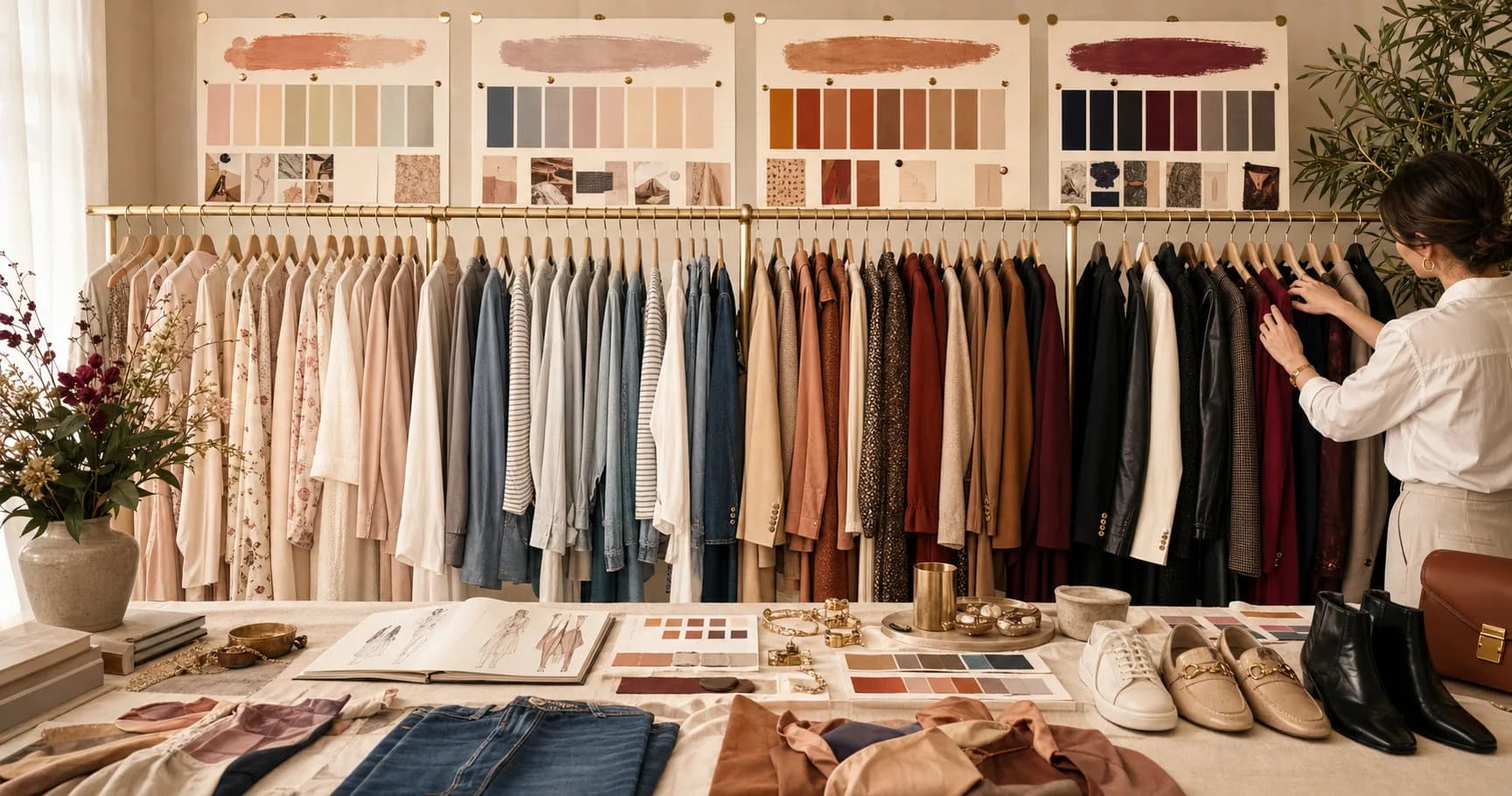
A capsule wardrobe does not have to mean black, white, gray, beige, and one striped shirt. If you know your color season, your capsule can be more personal and easier to wear because the colors already share a visual logic.
The goal is not to replace everything. The goal is to build around seasonal neutrals, add the right accents near your face, and stop buying colors that never make it into outfits.
Use color season as your capsule DNA
Your season gives you three useful wardrobe variables: temperature, value, and chroma. Spring capsules feel warm and clear. Summer capsules feel cool and softened. Autumn capsules feel warm and earthy. Winter capsules feel cool, clear, and high contrast.
That shared DNA is what makes pieces mix. A Summer soft navy blazer works with dusty rose, misty blue, cool taupe, and pewter. An Autumn camel coat works with olive, rust, mustard, warm teal, chocolate, and bronze.
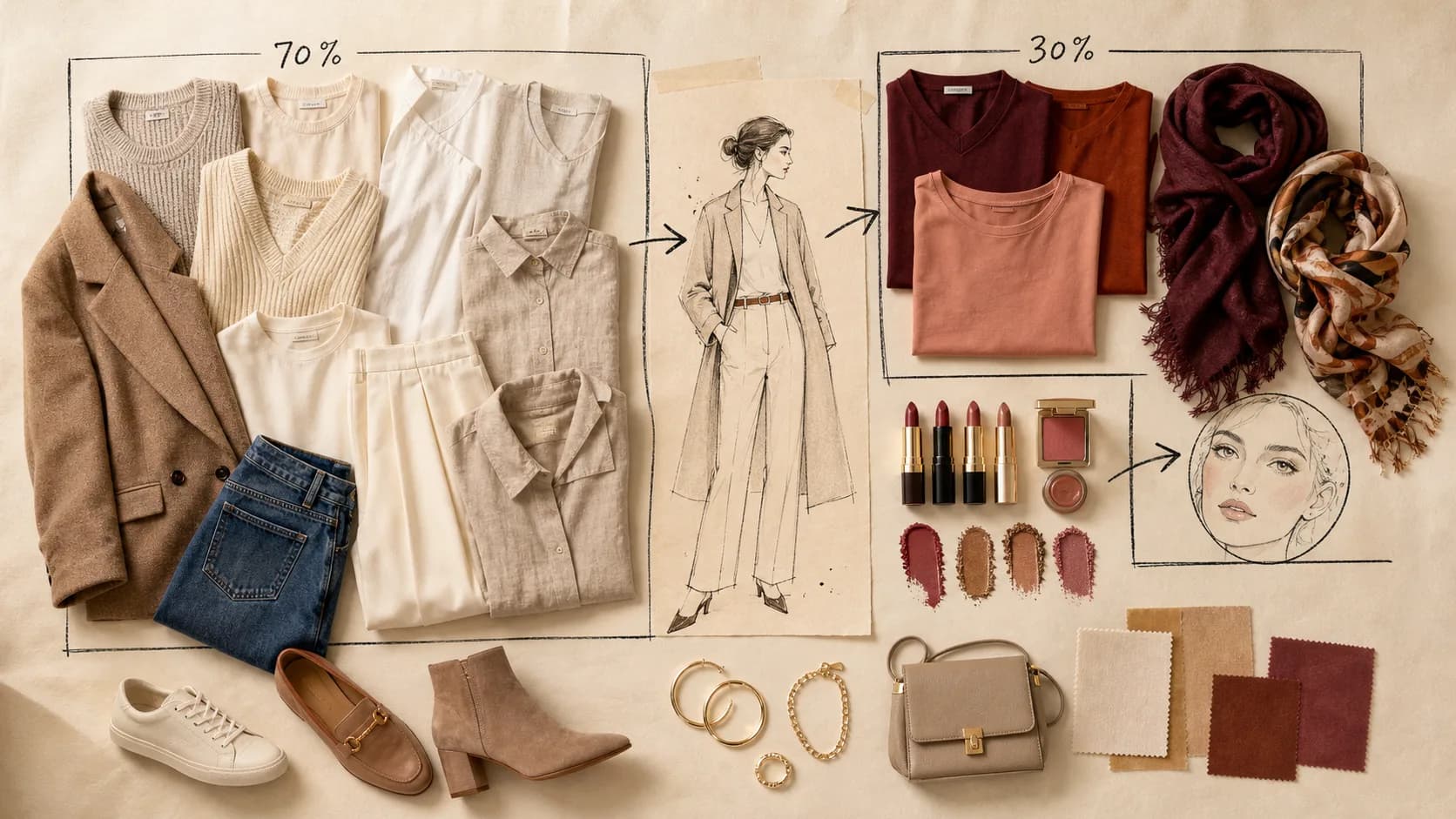
The 70/30 rule
Use seasonal neutrals for about 70% of the capsule: trousers, jackets, coats, shoes, bags, belts, denim, and base layers. Use accents for the remaining 30%: tops, scarves, knits, dresses, lipstick, earrings, and other pieces that sit near the face.
This keeps the wardrobe practical without turning it dull. A Winter capsule can still use black and white, but should add cobalt, emerald, fuchsia, blue-red, or icy pink. A Spring capsule can still use ivory and camel, but should add coral, aqua, warm green, or sunny yellow.
- Spring neutrals: warm ivory, camel, tan, light warm navy.
- Summer neutrals: soft navy, dove gray, pewter, cool taupe.
- Autumn neutrals: camel, olive, chocolate, espresso, warm beige.
- Winter neutrals: black, optic white, charcoal, sharp navy, icy gray.
The near-face rule
Be strictest with tops, jackets, scarves, glasses, earrings, hair color, and lipstick because they affect the face directly. Pants, skirts, shoes, and bags can be less exact if the outfit still reads cohesive.
This rule saves money. You can keep black trousers if you are not a Winter, but soften them with a Summer blouse, warm them with an Autumn jacket, or brighten them with a Spring scarf depending on your palette.
Capsule formulas by season
Spring: warm ivory tee, camel trouser, coral blouse, turquoise knit, warm navy jacket, light denim, gold or rose-gold jewelry, tan sandal, fresh coral lip. Keep colors clear and avoid heavy charcoal-only outfits.
Summer: soft navy jacket, cool taupe trouser, dusty rose knit, misty blue shirt, gray-blue denim, pewter or silver jewelry, mauve lipstick, dove gray shoe. Keep contrast blended rather than stark.
Autumn: camel coat, olive jacket, rust blouse, mustard knit, chocolate trouser, warm teal dress, cognac boot, bronze hardware, terracotta lipstick. Texture helps: suede, leather, linen, brushed cotton, and tweed.
Winter: black blazer, optic white shirt, charcoal trouser, cobalt knit, emerald dress, midnight denim, silver hardware, blue-red lipstick, polished black shoe. Keep lines crisp and contrast intentional.
Denim, metals, and shoes count
Denim often decides whether a capsule feels coherent. Springs usually suit lighter or clearer blue denim. Summers often look better in faded, gray-blue, or soft indigo denim. Autumns suit golden, olive, tobacco, or warm dark washes. Winters can carry black, blue-black, midnight, and sharp indigo.
Metals and leather finishes matter too. Spring likes bright gold or rose gold, Summer likes silver and pewter, Autumn likes antique gold, brass, bronze, and copper, and Winter likes silver, platinum, and polished black hardware.
Capsule wardrobe colors by season
Each season needs its own neutral strategy. A generic grayscale capsule works best for Winter and worst for many Springs and Autumns. A beige capsule may suit Autumn or Spring but can wash out Summer and fight Winter. The capsule works when the base colors already belong to the palette.
Choose base pieces from your seasonal neutrals, then use accent colors where they matter most: tops, scarves, jackets, jewelry, lipstick, and glasses. That gives you mix-and-match range without turning every outfit into a color-analysis exercise.
- Spring base: warm ivory, camel, tan, light warm navy, clear denim; accents: coral, aqua, apple green, sunny yellow.
- Summer base: soft navy, dove gray, pewter, cool taupe, rose beige; accents: dusty rose, lavender, seafoam, muted berry.
- Autumn base: camel, olive, chocolate, espresso, warm beige, cognac; accents: rust, mustard, terracotta, deep teal.
- Winter base: black, optic white, charcoal, sharp navy, icy gray; accents: cobalt, emerald, fuchsia, blue-red, icy pink.
Seasonal shopping checklist
Before buying a capsule piece, ask three questions. Does the color sit in my seasonal neutral or accent family? Will it be worn near my face or away from my face? Does it connect to at least three pieces I already own?
This keeps the capsule practical. A perfect seasonal color that matches nothing is less useful than a slightly flexible bottom or shoe that helps five outfits work. The strictest rule belongs to face-framing pieces; the most flexible rule belongs to pants, shoes, belts, and bags.
- Near face: buy within palette for tops, jackets, scarves, earrings, glasses, and lipstick.
- Below waist: allow more flexibility if the outfit is balanced by better colors above.
- Hardware: match season metals, especially on glasses, earrings, buttons, belts, and bags.
- Prints: keep print contrast and color temperature consistent with your season.
- Budget: thrift, tailor, dye, alter, or replace slowly before buying a full new wardrobe.
Wardrobe staples by season
A seasonal capsule becomes practical when the staples are specific. Spring staples might be warm ivory tees, camel trousers, tan sandals, light denim, coral knits, turquoise scarves, and polished gold. Summer staples might be soft navy jackets, cool taupe trousers, gray-blue denim, dusty rose tops, pewter jewelry, and mauve lipstick.
Autumn staples might be camel coats, olive jackets, chocolate trousers, cognac boots, mustard knits, rust blouses, bronze hardware, and terracotta lipstick. Winter staples might be black blazers, optic white shirts, charcoal trousers, midnight denim, cobalt knits, silver hardware, and blue-red lipstick.
- Spring: clear, warm, fresh, light-to-medium, polished rather than dusty.
- Summer: cool, muted, blended, gray-blue, rose, taupe, and pewter.
- Autumn: warm, earthy, textured, camel, olive, rust, chocolate, and bronze.
- Winter: cool, clear, high contrast, black, white, jewel tones, and silver.
Capsule Wardrobe by Color Season evidence checklist
Capsule Wardrobe by Color Season should be judged by repeated evidence, not by one attractive swatch, one selfie, or one quiz answer. The strongest signal is consistency: the same color direction should make the face look clearer in daylight, make makeup easier, and make outfits feel more coherent.
Use this page with related guides such as seasonal color analysis, spring color palette, summer color palette, autumn color palette. Cross-linking the evidence matters because color analysis is not just one category. A palette affects wardrobe neutrals, lipstick, hair color, metals, denim, and how much contrast an outfit can carry near the face.
For this topic, start with the practical test that matches the search intent: compare methods, check privacy and photo quality, then verify the result with real clothing, lipstick, jewelry, or consultant questions.
- Run the test in indirect daylight rather than warm bathroom light or golden hour.
- Remove strong lipstick, bronzer, filters, and saturated clothing when judging undertone.
- Compare neighboring possibilities directly instead of asking whether one label feels perfect.
- Keep notes on skin clarity, eye brightness, shadow, redness, and whether the color or your face gets attention.
- Use StyleCard as a photo-based preview, then keep only the guidance that survives real-world checks.
Capsule Wardrobe by Color Season practical next steps
After reading a guide like this, the next step should be small and testable. Do not replace a wardrobe, book a major salon change, or buy several products because one label sounded right. Start with one near-face color, one neutral, one metal, and one makeup cue.
If you are comparing tools, begin with the lowest-risk method that gives useful evidence. A free preview or quiz can narrow the field; a kit or consultant can resolve close calls; a paid report is most useful when it adds practical shopping, makeup, hair, and outfit guidance.
The most trustworthy result is flexible but not vague. It should say what to try, what to avoid, why the result might be uncertain, and how to confirm it. That is especially important for olive undertones, neutral coloring, deeper skin, dyed hair, gray hair, very muted palettes, and high-contrast palettes. If a recommendation cannot explain the tradeoff it is making, test again before spending money. A result should make repeat decisions easier, not just add a label.
- First purchase to test: one top, scarf, or lipstick in the likely palette.
- First closet move: move best colors near the face and weaker colors below the waist.
- First beauty move: test blush or lipstick before changing foundation or hair.
- First hair move: ask for a gloss, toner, or small shift before a dramatic multi-level change.
- First verification move: retake a clean photo and compare the result against real fabric.
- Final check: the guidance should improve at least three real choices, such as a neutral, a lip color, and a face-framing outfit.
Transition sustainably
Do not throw away a closet because one app or quiz named a season. Audit what you own first. Move the best colors near your face, demote weaker colors to bottoms or layering pieces, tailor what already works, and replace slowly as items wear out.
If your result is close or surprising, use StyleCard as a practical first pass and verify with real outfits before buying a capsule all at once.
Try it on your photo
Turn your season into a StyleCard
Upload a selfie and get color, outfit, makeup, hair, and overview cards before you build a new capsule.
Turn your season into a StyleCardRelated StyleCard guides
FAQ
- How many pieces should be in a seasonal capsule wardrobe?
- There is no universal number. Start with enough pieces for your climate, dress code, laundry cycle, and lifestyle, then make sure most pieces share seasonal neutrals and accent colors.
- Can I wear black if it is not in my season?
- Yes, especially away from the face. If black is harsh on you, use it for shoes, trousers, or bags and put your best seasonal colors near your face.
- What colors should be near my face?
- Use your best tops, jackets, scarves, lipstick, earrings, and glasses colors near the face because they affect skin, eyes, and shadows most directly.
- What denim wash fits each season?
- Spring often likes clear light or medium blue, Summer gray-blue and soft indigo, Autumn warm tobacco or olive-cast denim, and Winter black, blue-black, midnight, or crisp indigo.
- Should I replace my wardrobe after color analysis?
- No. Audit first, keep what works, move weaker colors away from the face, and replace slowly when an item naturally needs replacing.
Sources
About the StyleCard Team
Our guides are written using established color analysis frameworks — including the seasonal color system and Munsell color theory — reviewed against practitioner and academic sources, and updated when research or product changes warrant a revision. See the Sources section above for the references used in this article.