
light spring color palette
Light Spring Color Palette
By the StyleCard Team · Last updated June 27, 2026
See light spring colors, makeup cues, hair direction, and outfit ideas, plus how light spring differs from light summer and true spring.
Short answer
Light spring is the lightest, most delicate spring palette: warm to neutral-warm, low contrast, and best in clear but gentle colors rather than deep or dusty ones.
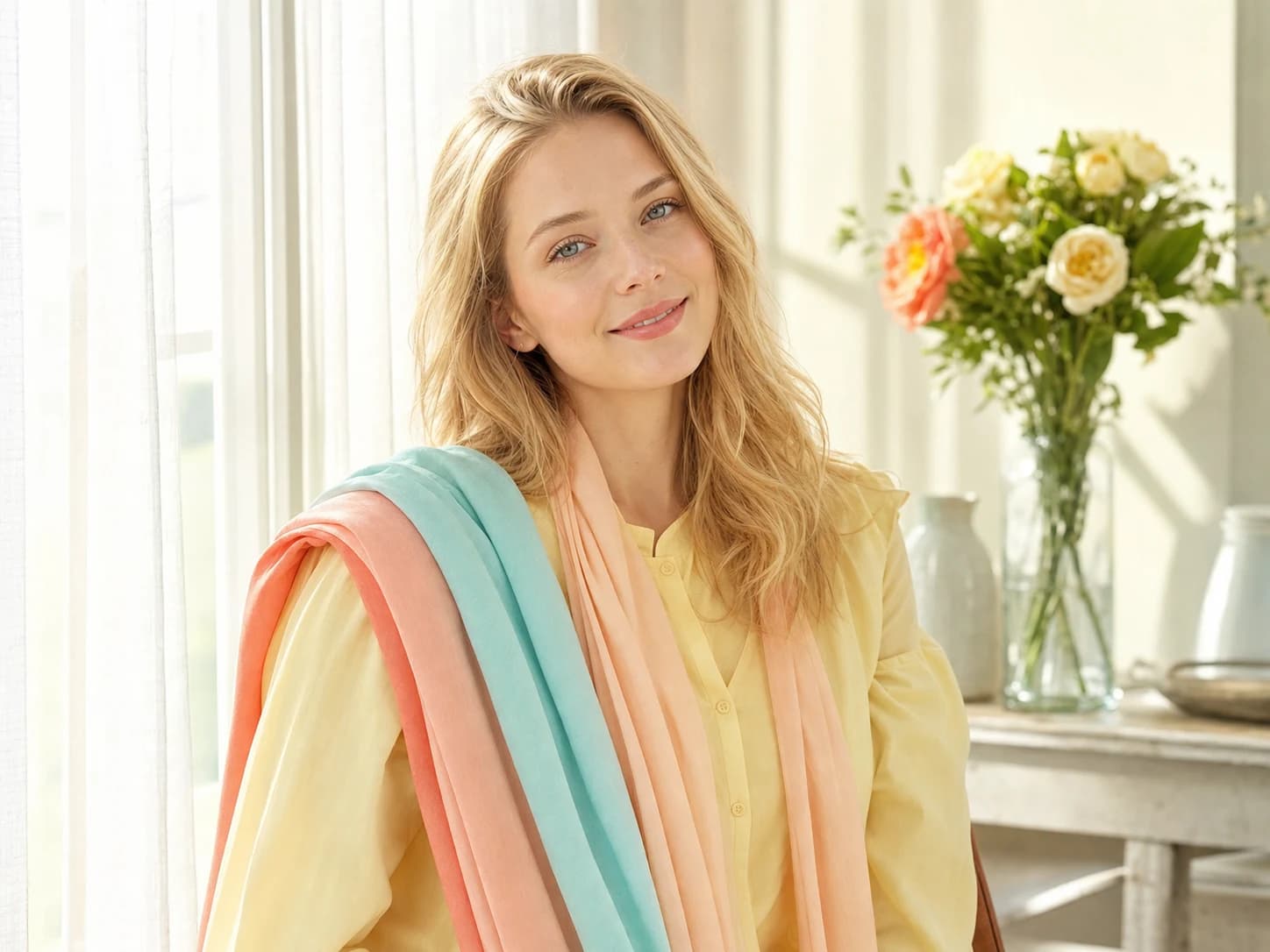
The light spring color palette is warm, very light, and delicate. It sits between spring and summer, which is why it can borrow a little softness but still looks best when colors stay warm and airy.
Think warm ivory, peach, primrose, celery, melon, Tiffany blue, and jacaranda. Heavy black, cool mauve, stark white, and dense earth tones usually feel too strong against light spring coloring.
Light spring palette traits
Light spring is the lightest member of the spring family. It stays warm and fresh, but it never turns vivid. The palette needs enough clarity to lift the face without overpowering it: colors should feel peachy and airy rather than dusty or stark.
The easiest neutrals are warm ivory, light beige, soft khaki, camel, and warm taupe. Pure black is often the first mistake: it contrasts too sharply with a naturally soft, low-contrast coloring. A dark rich brown or warm navy is usually easier near the face.
Light spring vs light summer
Light spring and light summer share lightness and low contrast, but they sit on opposite sides of the warm-cool divide. Light summer is cooler, with rose, powder blue, lavender, and soft mauve. Light spring is warmer, with peach, coral, primrose, and warm aqua.
The fastest test is lipstick: reach for a warm peach-coral and a soft cool pink. If the warm peachy version makes your face look fresher, light spring is closer. If the cool rose looks calmer and more natural, light summer may be the better fit.
Palette preview
Colors to test near your face
- Undertone
- Neutral-warm to warm
- Chroma
- Light and gently clear
- Value
- Very light
- Contrast
- Low
Best colors
Melon
#FEA079
Peach
#FFCBA4
Primrose
#F4E97B
Lime
#C3FAA3
Celery
#CFF0C0
Tiffany blue
#3FE1D1
Jacaranda
#B18BDA
Neutrals
Warm ivory
#FFFFF2
Beige
#E3DAC9
Khaki
#D0C4AD
Chocolate milk
#AB917C
Creamy coffee
#9B7353
Makeup cues
Coral pink
#EA6677
Pale peach
#FECBA4
Use carefully
Pure black
#000000
Outfit starting points
- Warm ivory knit, melon skirt, pale gold flats.
- Celery blouse, beige trousers, Tiffany-blue earrings.
- Peach dress, jacaranda cardigan, warm nude sandal.
- Primrose tee, soft khaki shorts, coral-pink lip.
Makeup and hair direction
Light spring makeup usually looks best in peachy pink, apricot, coral-pink gloss, cream, yellow-leaning taupe, and soft pastel accents. Heavy black liner, cool blue eye shadows, and matte brown-heavy lips can look disconnected. The easiest single swap is a warm peach or coral tint.
Hair works well when it stays warm and light: light golden blonde, beige blonde, soft strawberry blonde, light golden brown, or pale taupe-grey for greying hair. Ashy tones, blue-black, and stark cool highlights can fight the palette quickly.
Light Spring Color Palette clothing checkpoints
Light Spring Color Palette works best when clothing follows the same undertone, value, chroma, and contrast as the palette. Start with the reliable anchors: Warm ivory, Beige, Khaki, Chocolate milk, Creamy coffee. Then use face-framing accents from the best-color range: Melon, Peach, Primrose, Lime, Celery, Tiffany blue.
Keep the strictest colors near your face. Tops, jackets, scarves, earrings, glasses, and lipstick affect skin and eye clarity most. Pants, shoes, and bags can be more flexible, but the outfit should still read as one color story instead of several competing palettes.
Use caution with Pure black. Those colors are not banned, but they usually work better away from the face or balanced with stronger palette colors above the waist.
- Best accents to test: Melon, Peach, Primrose, Lime, Celery, Tiffany blue.
- Best neutrals to build around: Warm ivory, Beige, Khaki, Chocolate milk, Creamy coffee.
- Makeup cues to compare: Coral pink, Pale peach.
- Avoid buying a full capsule until three near-face colors work in daylight.
- If black, white, beige, denim, or gold feels off, adjust those basics before replacing statement pieces.
Light Spring Color Palette verification loop
Verify Light Spring Color Palette with paired comparisons, not isolated swatches. Hold one likely best color near your face, then hold the nearest wrong color. You are looking for changes in skin evenness, under-eye shadows, redness, jaw definition, and whether your eyes look clearer.
Then test a real outfit and a real makeup cue. A palette should survive practical use: a top you would wear, a neutral you can build around, a lipstick or blush family, a metal, and a denim or shoe color. If the palette only looks good as a digital swatch, keep testing.
Neighboring seasons are the hardest part. If the result feels close, compare the sister palette directly rather than asking whether every color is perfect. Seasonal analysis is strongest when it explains which tradeoff is easier: warmer or cooler, softer or brighter, lighter or deeper.
- Daylight test: one best color, one avoid color, and one neutral from the palette.
- Makeup test: compare Coral pink, Pale peach against an opposite undertone.
- Wardrobe test: build one outfit from Warm ivory knit, melon skirt, pale gold flats..
- Photo test: retake in neutral light if the result depends on one selfie.
- Shopping rule: buy slowly, keep useful off-palette pieces away from the face, and replace basics first.
How to test it
Hold warm ivory, peach, and primrose near your face in natural light. Then compare them with cool lavender, slate blue, and pure black. You are looking for the set that makes your skin look even and warm rather than washed out or contrasted.
The metal test is also fast: light yellow gold and soft rose gold usually sit better on light spring coloring than bright silver, which can read slightly cool. StyleCard can check this direction from a selfie and show whether warm light colors work on your face before you change your wardrobe or makeup.
Use the result as a shopping filter, not a rulebook. If a color is too deep, choose the lighter version; if it is too cool, look for the same idea with peach, cream, or yellow warmth. That keeps the page practical for real closets, where you may already own beige trousers, pale denim, or a favorite floral print that only needs warmer makeup and softer contrast to feel right. Start there.
Try it on your photo
Check your light spring palette
Upload a natural-light selfie and see whether light warm colors suit your face before buying new makeup or clothes.
Check your light spring paletteRelated StyleCard guides
FAQ
- Can light spring wear black?
- Usually not as a default neutral. Softer warm taupe, light navy, or warmed pewter is easier because pure black tends to overpower the season's delicate low-contrast look.
- Is light spring gold or silver?
- Lighter, warmer gold usually works better. Icy silver can make the complexion look cooler or flatter than the palette intends.
- Can light spring borrow from light summer?
- At the warmer edge of light summer, yes. Once cool pink-blue dominates, light summer is usually the better fit.
- What lipstick is easiest for light spring?
- Pale peach, apricot, or warm coral gloss or stain is the safest starting point. Matte lipstick can look heavier than the palette needs.
- Can a person of color be light spring?
- Yes. Light spring is about relative lightness, warmth, clarity, and low contrast together. It should not be limited to one ethnicity or one skin depth.
Sources
About the StyleCard Team
Our guides are written using established color analysis frameworks — including the seasonal color system and Munsell color theory — reviewed against practitioner and academic sources, and updated when research or product changes warrant a revision. See the Sources section above for the references used in this article.