
true winter color palette
Cool Winter Color Palette
By the StyleCard Team · Last updated June 27, 2026
See cool winter colors, makeup cues, hair direction, and outfit ideas, plus how cool winter differs from bright winter and deep winter.
Short answer
Cool winter — also called true winter — is the most purely cool winter palette: cool undertone, high chroma, broad value range, and best in frosted jewel tones and icy contrast rather than earthy or Spring-adjacent shades.
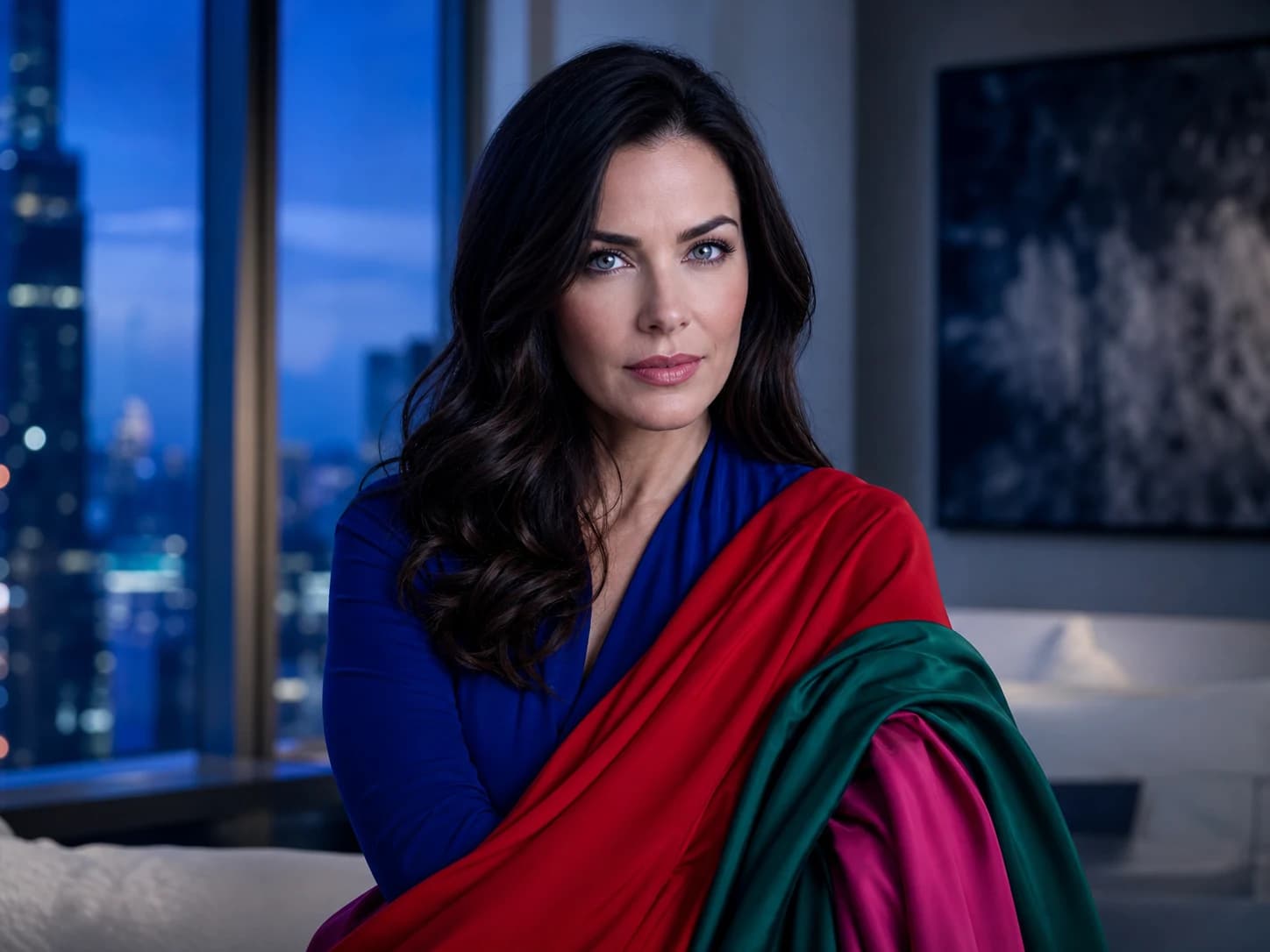
The cool winter color palette — also called true winter — is the purest expression of winter's coolness. It has the most clearly cool undertone of the three winter sub-seasons, with less spring brightness than bright winter and less autumn shadow than dark winter.
Think fuchsia, royal blue, sapphire, jade, orchid, dark purple, icy pink, optic white, and black. Bronzer, peach or yellow foundation, warm camel accessories, and muted warm makeup tend to look visibly out of place on cool winter coloring.
Cool winter palette traits
Cool winter — or true winter — is the coolest anchor of the winter family. Bright winter borrows spring's vividness; dark winter borrows autumn's depth. Cool winter stays the most purely cool, with frosted jewel tones, icy contrast, and a clean blue or silver base.
Black, white, navy, silver-grey, and dramatic charcoal are the default neutral anchors. Warm beige and camel usually look disconnected because the cool undertone makes them read warmer than the face wants. When building a neutral wardrobe, crisp black-and-white contrast is the clearest starting point.
Cool winter vs bright winter and deep winter
Within the winter family, cool winter sits in the most purely cool position. Bright winter leans toward spring and handles the highest chroma and vividness. Deep winter leans toward autumn and handles the darkest inky shades with some warmth.
If the highest-clarity colors like electric azure and hot fuchsia look a little too high-energy and you prefer the icy purity of sapphire and jade, cool winter is closer than bright winter. If the very darkest shades like espresso or forest green feel heavier than the palette needs, cool winter is probably lighter than deep winter.
Palette preview
Colors to test near your face
- Undertone
- Cool
- Chroma
- High and clear
- Value
- Broad range from icy light to very dark
- Contrast
- High
Best colors
Icy pink
#F4D5E2
Orchid
#DA71D7
Dark purple
#650B25
Royal blue
#0245AB
Sapphire
#011B94
Jade
#009B8D
Lemon-ice yellow
#FCEC5E
Neutrals
Optic white
#FFFFFF
Icy lavender-white
#F3F4FD
Silver grey
#D9DDE0
Charcoal
#49494B
Black
#000000
Makeup cues
Fuchsia
#E50A5F
Use carefully
Camel brown
#C19A6B
Outfit starting points
- Black coat, royal-blue knit, fuchsia lip.
- White shirt, jade trouser, silver jewelry.
- Sapphire dress, icy-pink accessory, charcoal pump.
- Orchid knit, navy pant, black eyeliner.
Makeup and hair direction
Cool winter makeup looks best in cool-based foundation, cool pink or deeper cool red blush, fuchsia or raspberry lip, and cool grey or jewel-toned eyeshadow. Crisp, dewy-satin, or high-definition finishes suit better than flat matte. Bronzer, peachy foundation, and dull matte base are consistent mistakes because they add warmth that fights the palette's pure coolness.
Hair stays clearest in cool dark brown, black, blue-black, and silver-grey as natural greying progresses. Copper, caramel balayage, warm auburn, and golden highlights can pull the complexion warmer than the palette wants.
Cool Winter Color Palette clothing checkpoints
Cool Winter Color Palette works best when clothing follows the same undertone, value, chroma, and contrast as the palette. Start with the reliable anchors: Optic white, Icy lavender-white, Silver grey, Charcoal, Black. Then use face-framing accents from the best-color range: Icy pink, Orchid, Dark purple, Royal blue, Sapphire, Jade.
Keep the strictest colors near your face. Tops, jackets, scarves, earrings, glasses, and lipstick affect skin and eye clarity most. Pants, shoes, and bags can be more flexible, but the outfit should still read as one color story instead of several competing palettes.
Use caution with Camel brown. Those colors are not banned, but they usually work better away from the face or balanced with stronger palette colors above the waist.
- Best accents to test: Icy pink, Orchid, Dark purple, Royal blue, Sapphire, Jade.
- Best neutrals to build around: Optic white, Icy lavender-white, Silver grey, Charcoal, Black.
- Makeup cues to compare: Fuchsia.
- Avoid buying a full capsule until three near-face colors work in daylight.
- If black, white, beige, denim, or gold feels off, adjust those basics before replacing statement pieces.
Cool Winter Color Palette verification loop
Verify Cool Winter Color Palette with paired comparisons, not isolated swatches. Hold one likely best color near your face, then hold the nearest wrong color. You are looking for changes in skin evenness, under-eye shadows, redness, jaw definition, and whether your eyes look clearer.
Then test a real outfit and a real makeup cue. A palette should survive practical use: a top you would wear, a neutral you can build around, a lipstick or blush family, a metal, and a denim or shoe color. If the palette only looks good as a digital swatch, keep testing.
Neighboring seasons are the hardest part. If the result feels close, compare the sister palette directly rather than asking whether every color is perfect. Seasonal analysis is strongest when it explains which tradeoff is easier: warmer or cooler, softer or brighter, lighter or deeper.
- Daylight test: one best color, one avoid color, and one neutral from the palette.
- Makeup test: compare Fuchsia against an opposite undertone.
- Wardrobe test: build one outfit from Black coat, royal-blue knit, fuchsia lip..
- Photo test: retake in neutral light if the result depends on one selfie.
- Shopping rule: buy slowly, keep useful off-palette pieces away from the face, and replace basics first.
How to test it
Hold icy pink, royal blue, and fuchsia near your face in natural light. Then compare them with warm camel, golden yellow, and peach. Cool winter colors should make the skin look even and bright; warm colors should look slightly disconnected or add unwanted warmth to the face.
The bronze versus silver test is one of the clearest signals: if bright silver jewelry looks crisper while yellow gold looks a little warm, that is a consistent cool-season pattern. StyleCard can check this direction from a selfie.
For everyday styling, cool winter does not have to mean theatrical color. Black, white, charcoal, and navy can carry most outfits, while icy pink, sapphire, jade, or fuchsia act as deliberate accents. This keeps the palette wearable for work and errands while still preserving the cool clarity that makes true winter different from soft summer or deep winter.
Try it on your photo
Check your cool winter palette
Upload a selfie and see whether cool jewel tones work on your face before buying new makeup, clothes, or committing to a hair change.
Check your cool winter paletteRelated StyleCard guides
FAQ
- Is cool winter the same as true winter?
- Yes. Those labels are interchangeable in most expert sources and refer to the same palette.
- Can true winter wear bronzer?
- Experts consistently advise against bronzer for cool winter. It adds warmth that fights the palette's pure coolness. A cool highlighter is a better option.
- What lipstick is easiest for cool winter?
- Fuchsia, cool red, deep rose, and raspberry. These stay cool enough to work with the palette's overall character.
- Does cool winter always have high contrast?
- Yes in most expert descriptions, though the exact feature combination can vary from person to person.
- Can cool winter wear cream?
- Usually no. Cream and ivory add yellow warmth, while cool winter is cleaner in optic white, icy white, silver gray, black, and navy.
Sources
About the StyleCard Team
Our guides are written using established color analysis frameworks — including the seasonal color system and Munsell color theory — reviewed against practitioner and academic sources, and updated when research or product changes warrant a revision. See the Sources section above for the references used in this article.